Rosary Sunday Pilgrimage Sermon

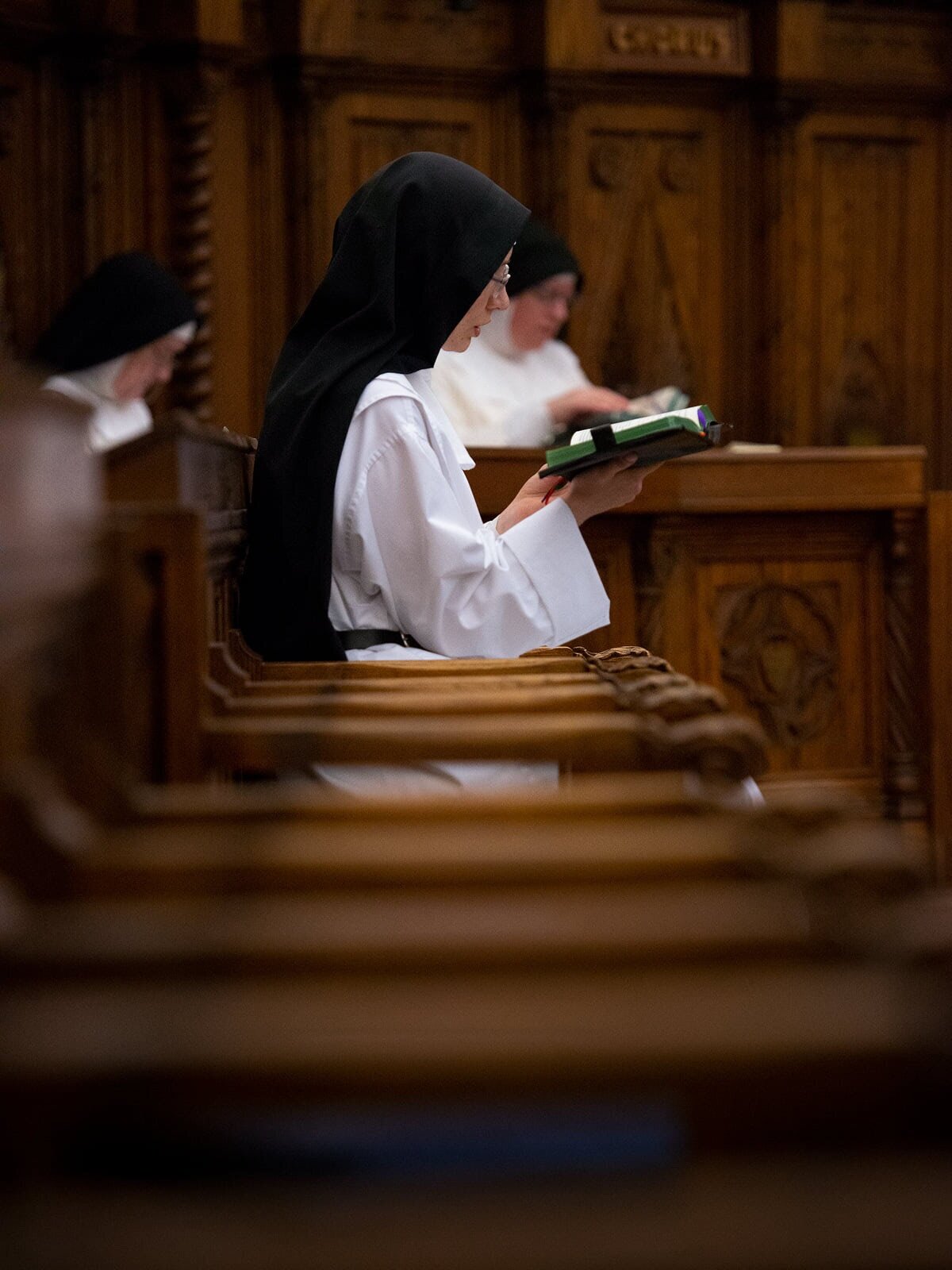
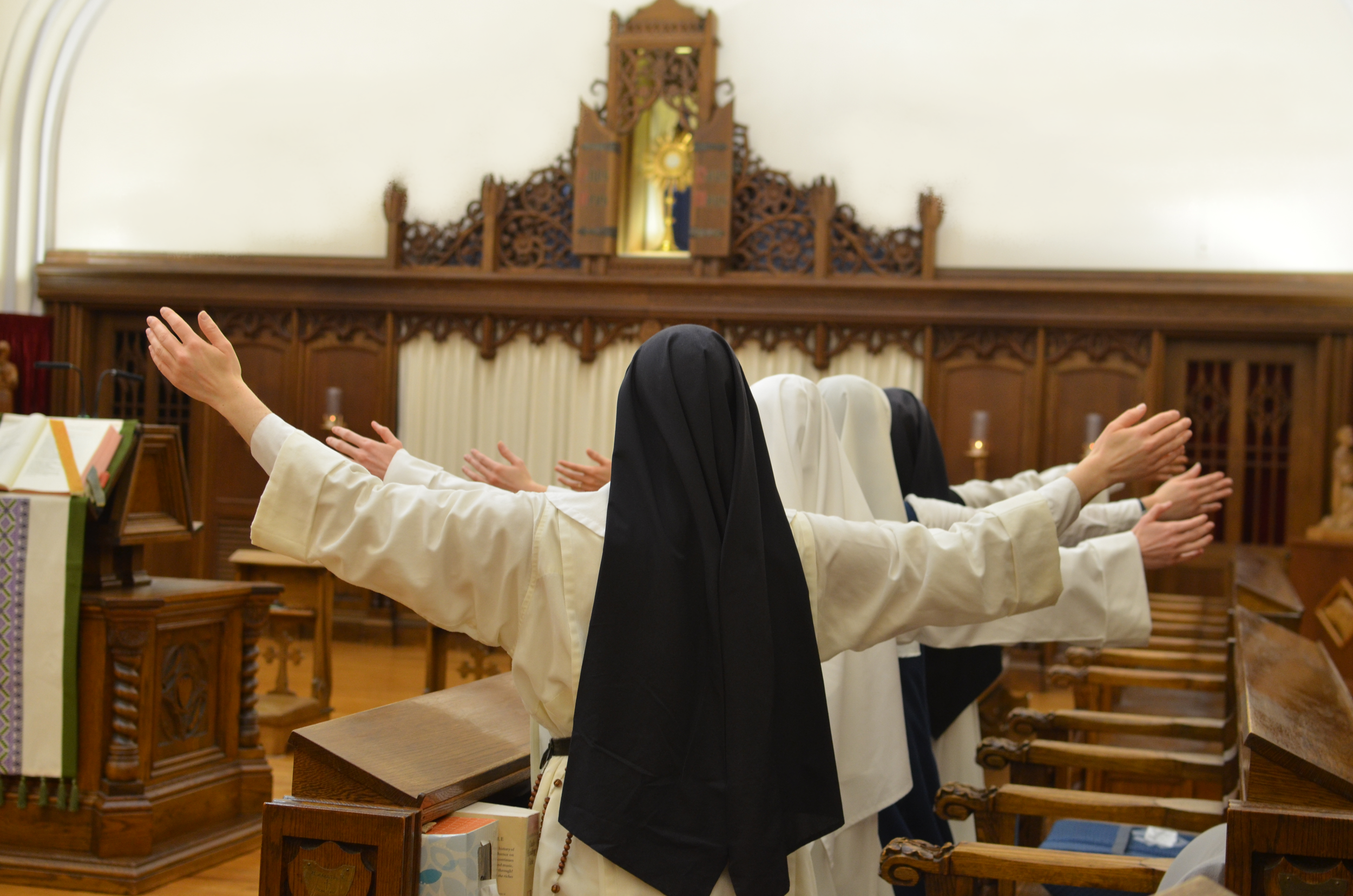
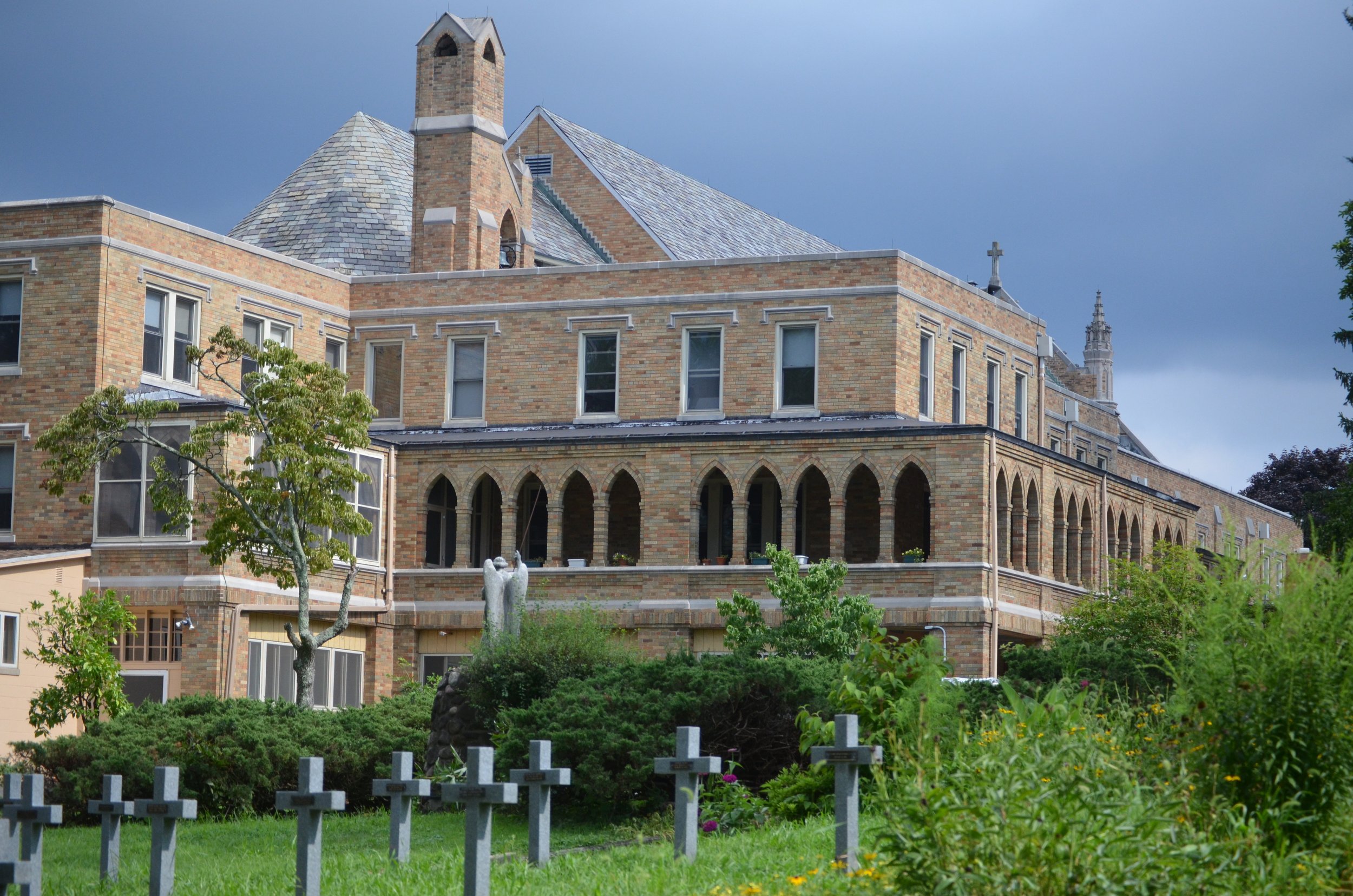
IMG_2990We thought you might like to read the sermon Fr. Augustine Reisenauer, OP, gave at last week’s Rosary Sunday Pilgrimage.

“The rosary has a long history and deep roots as a method of contemplative prayer. As Blessed John Paul II has reminded us, when we pray the rosary, we entrust ourselves to the Blessed Virgin Mary in seeking to contemplate the face of Jesus Christ. To contemplate the face of Christ and to meditate on the mysteries of his life and death, his illumination and glorification, deepens our relationship with the Trinitarian God whose divine face our human hearts desire to contemplate forever. One of the aspects of the rosary—an aspect that in large part accounts for its widespread popularity down through the generations and across cultures—is its plasticity and adaptability. The rosary resonates with many people in many diverse ways. In particular, on this Rosary Sunday in this year of faith, perhaps we can contemplate together one of these ways: the rosary as a way of faith. How can the rosary function as an instrument of faith and how can it contribute to solving some of the crises of faith that we see in our world today? Perhaps we can consider three significant problems in particular: first, ignorance of the faith; second, apathy towards the faith; third, withholding of the faith.
First, it seems that our world continues on its path towards becoming progressively secular. More and more people are becoming more and more forgetful of God. In turning their minds to other considerations and other concerns, people tend to ignore God and fall into ignorance of God. Things consume the minds of many of our contemporaries. The trends and the excitements and the fascinations of the world captivate people’s attention. People tend to look down rather than up, to focus on the temporary present rather than the eternal future. And so, they ignore those sublime realities of truth and goodness, beauty and love, which ennoble our human existence. They direct their minds away from the God who is at once both more interior than their deepest depths and more superior than their highest heights. But without knowing in faith who God is, how can people come to realize their purpose of their lives? Without knowing God and being known by God, how can people come to perfect peace?”

To read the whole homily click HERE.

St. Antoninus

Today is the feast of St. Antoninus. We thought you might enjoy this brief homily about the life and virtues of this beloved Saint of the Order of Preachers:

Our Dominican brethren posted the following last year in their Dominican Saints 101 series:

St. Antoninus of Florence (1389-1459, feast – May 10) was an eminent pastor.  He was so well respected during his life that Pope Nicholas V, who canonized St. Bernadine of Siena, said that he thought Antoninus, even while Antoninus was still alive, was equally worthy of canonization.  His pastoral skills come out in three particular areas: counsel, generosity to the poor, and teaching.

Firstly, St. Antoninus had been especially blessed with the gift of counsel.  Because of this, he was even known as the “Angel of Counsels.”  Princes and prelates would turn to him for advice.  He was sought out to bring peace to warring groups.  He was so respected in this regard that Pope Nicholas V even forbade appeals to be made against sentences passed by Antoninus.

Secondly, Antoninus was known to be extremely generous to the poor.  Having been trained to understand the vow of poverty by Bl. John Dominici and Bl. Lawrence of Rippafratta, and making his novitiate with Bl. Peter Capucci and Bl. Fra Angelico, Antoninus maintained a life of simplicity even as a bishop.  Whatever he had was just as much the property of the poor as it was his own.

Finally, he was an eminent teacher.  He penned great works of theological importance, especially his Summa Theologica Moralis which served as an immensely helpful aid to pastors and confessors.  Moreover, he took his teaching office seriously, establishing Confraternities of Christian Doctrine in Florence to educate the youth.

May we be helped, Lord, by the merits of your holy confessor and bishop, Antoninus, that as we make known your wonders in him, we may also rejoice at your mercies to us.  Through Christ our Lord.


Year of Faith Reflection Corner

year of faith

 He ascended into heaven, and sits at the right hand of God the Father Almighty.

The Ascension of our Lord Jesus Christ is very significant and very crucial in our salvation history. In the Apostle’s Creed, we profess our faith in these words: He ascended into heaven and is seated at the right hand of the Father. Do we truly grasp the meaning of these words in our hearts? What does Christ’s Ascension really mean to us as Christians? Do we think that Jesus has ascended to Heaven and left us orphans?

How can anyone believe that Jesus who has united Himself with our own humanity and is like us in everything except sin, who paid such a great price for our Redemption with His Blood and died such an ignominious death on the Cross, who rose from the dead, and has now taken His seat at the Father’s side, would ever forget us, after all He has done to open Heaven for us and reconcile us to the Father. How about all the troubles, challenges and sufferings that the people of Christ are facing daily in the world, do we feel that our hope has been shattered in the midst of so much pain? It is my prayer as you read that the Holy Spirit will enkindle in your hearts a deeper faith in Jesus, and awaken in you a joyful hope for heaven.

If we ever doubt the meaning of our own existence on earth, Christ’s Ascension should enlighten us. From the beginning of Creation, God’s ultimate plan for us is to live happily with Him forever. Not that God has any need of us, but because of His great love for us and His desire to share His Divine Life with us in Heaven for all eternity.  According to St. Leo the Great: “Christ’s Ascension is our own ascension; our body has the hope of one day being where its glorious Head has preceded it. By going before us, Jesus gave us the right to follow him there some day.” In other words, our place in heaven is ready and guaranteed and it is up to us now to live our lives in such a way as to be worthy of it, to live as children of God by following in Christ’s footsteps. Listen carefully to the words of the great apostle Paul: “If you have risen with Christ, set your hearts on the things that are above where Christ is, seated at the right hand of God; seek the things that are above, not the things that are on earth.” (Colossians 3: 1-2)

Christ’s Ascension helps us understand in a much deeper and most intimate way the relationship between Jesus, the bridegroom and the Church, His bride. This Solemnity should fill us with great joy, hope and a sweet foretaste of heaven. Although we are not there yet, we indeed are there with Christ in spirit. We, the members of the Church, are the Body of Christ, the Head. Since the body cannot be separated from the Head, we can be sure that Christ is united with us always and is even much closer to us now through His Spirit than when he was on earth. St Paul reminds us that we are still united to Jesus, for in Christ “we have access to the Father.” (Ephesians 2:18). Christ took His seat at God’s right hand as our high priest “to make intercession for us because He lives forever.” (Hebrews 7:25) Therefore, Christ not only understands our troubles and difficulties, He also suffers them with us.

I love this beautiful quote from the Office of Readings: “Christ is now exalted above the heavens, but he still suffers on earth all the pain that we, the members of his body, have to bear. He showed this when he cried out from above: Saul, Saul, why do you persecute me? And when he said: I was hungry and you gave me food. Why do we on earth not strive to find rest with him in heaven even now through the faith, hope and love that unites us with him?” ( St. Augustine)

Lately I have been doing a lot of reading on the Jewish marriage customs in Jesus’ time to help my understanding of the Bridegroom Jesus and the Church, His Bride. I found it fascinating and hope this will shed much light for you on the meaning of Christ’s Ascension.

Dr. Brant Pitre, a Catholic theologian who specializes in the study of the New Testament and Judaism in his CD “The Bridegroom Messiah”, which I highly recommend and all his other audio presentations by going to  www.BrantPitre.com, has stated two main points of our salvation history: He said: “First, the fundamental shape and scope of salvation history which is God’s Plan to save the world is nuptial. It is marital. Second, God’s ultimate plan is to wed himself to humanity in an everlasting marital covenant” What a beautiful meditation this is!!!

 The Comforting Promise

Jesus said: “In my Father’s house there are many dwelling places. If there were not, would I have told you that I am going to prepare a place for you? And if I go and prepare a place for you, I will come back again and take you to myself, so that where I am you also may be.” (John14: 2-3)

In a nutshell, the Jewish Marriage customs in Jesus’ time involved four different stages: First, the betrothal period, which was binding. When a young man saw a girl he liked, he would take the initiative and travel from his father’s house to the home of the prospective bride. There he would negotiate with the father as to the price for the bride, and then he would make a marriage covenant with the bride, an actual contract which includes the “Bride Price”. Secondly, if the proposal is accepted, then the young man would drink a cup of wine with her which sealed the contract. Thirdly, the young man would leave to prepare the wedding chamber for the Bride which needed his father’s approval before he could come back to collect his bride. If anyone asked the young man when the wedding would take place, he would reply “I don’t know, only my father knows”, but before leaving, he would give a little speech “I go to prepare a place for you”. The contract, cup and money were her security. The young man and woman were regarded as husband and wife. From that moment on the bride was declared to be consecrated, set apart exclusively for her bridegroom. During this state of separation, the bride remained vigilant and made herself pure and prepared herself for married life since she had absolutely no idea when the bridegroom would return for her. The final stage is the wedding.

Read this beautiful analogy regarding the thirst stage by Dr. Showers: “Just as the Jewish groom left the home of his bride and returned to his Father’s house after the marriage covenant had been established, so Jesus left the earth, the home of the Church, and returned to His Father’s house in heaven after He had established the new covenant and risen from the dead. “(John 6:62; 20:17)

-Sr. Mary Jacinta of the Most Holy Rosary, OP